Insurance for the business behind the bounce

Cover the fun. Protect the business.

Bounce houses, wet slides, obstacle courses, or an indoor center—we help you find insurance that understands your fleet, your setup, and the venues counting on your certificate.

Participant coverage review Mobile and indoor operations Fleet, vehicle, and COI guidance
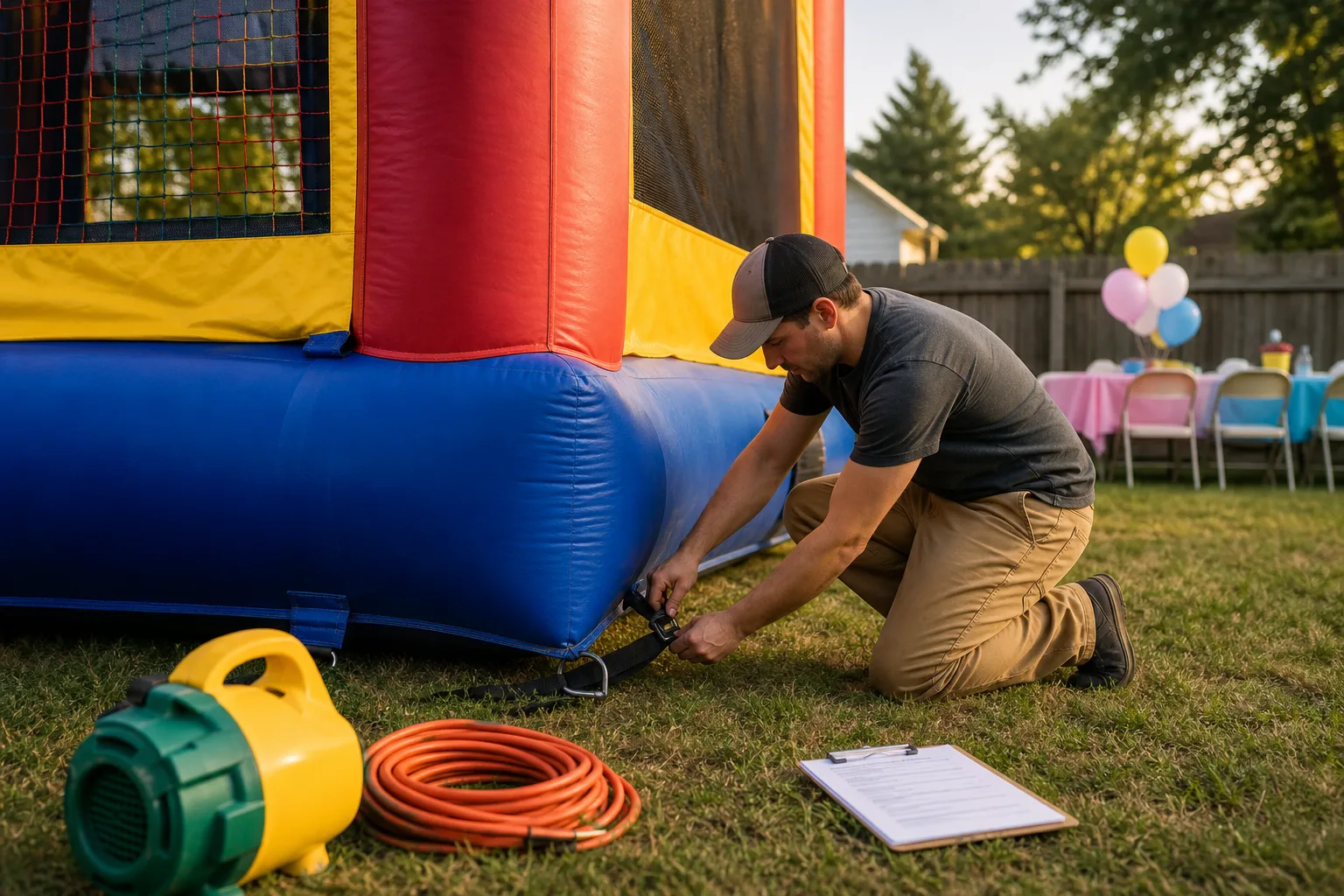
A commercial inflatable bounce house set up for an outdoor family event
Built aroundyour real fleet

The policy details that matter here

ParticipantsYour fleetWind & anchoringVenue certificates

Your operating model comes first

One industry. Four very different insurance conversations.

We start with what you rent, where you set it up, who supervises, and how the equipment moves—not a generic party-rental category.

01

Mobile rentals

Coverage shaped around delivery, setup, takedown, supervision, contracts, and every unit in your fleet.

  • Off-premises liability
  • Equipment in transit
  • Venue COIs
02

Wet & tall units

Water slides, combos, obstacle courses, and taller inflatables need to be disclosed and reviewed by unit.

  • Water exposure
  • Height and design
  • Manufacturer details
03

Indoor centers

A fixed play center brings premises, property, employees, business income, and participant exposures together.

  • Participant treatment
  • Contents and buildout
  • Lease limits
04

Staffed events

Schools, churches, parks, fairs, and corporate events add contracts, attendants, weather decisions, and deadlines.

  • Additional insureds
  • Wind procedures
  • Attendant controls

Read beyond the declarations

The expensive surprise is often hiding in the fine print.

A certificate can prove that a policy exists. It cannot tell you whether participants, inflatables, water use, or customer setup are restricted or excluded.

Start my policy check
01

The participant check

Are the people using your inflatables covered?

Some general liability forms exclude amusement devices or injuries to participants. A certificate alone will not reveal that gap.

02

The fleet check

Does the policy know every unit you rent?

Water slides, tall units, obstacle courses, mechanical features, foam, and borrowed equipment can change eligibility or require specific scheduling.

03

The handoff check

Who controls setup and supervision?

Customer pickup, self-setup, overnight rentals, and unattended use materially change the risk. The policy should match the way you actually operate.

04

The contract check

Can you satisfy the venue on time?

Parks, schools, churches, and municipalities may require specific limits, additional insured wording, and proof of coverage before the event.

Build the coverage stack

Protect the people, the fleet, and everything that moves.

Your final program depends on underwriting, state rules, contracts, and policy terms. These are the areas most operations should review together.

01

People

Claims involving participants, customers, attendants, and setup crews.

  • Participant-inclusive general liability
  • Participant accident medical
  • Workers compensation
  • Umbrella or excess liability
  • Abuse and molestation review
02

Fleet

The inflatables and gear that move between storage and event sites.

  • Inland marine or equipment floater
  • Inflatables, blowers, generators, and cords
  • Equipment in transit and at events
  • Theft and covered physical damage
  • Rented or borrowed equipment review
03

Road & base

Vehicles, trailers, storage, and fixed-location exposures.

  • Commercial auto
  • Hired and non-owned auto
  • Trailer physical damage
  • Commercial property and storage
  • Business income and cyber coverage

Where claims can begin

One event can expose every part of the operation.

These examples are illustrative. Whether coverage responds depends on the facts and the policy's terms, conditions, and exclusions.

  1. 01A child collides with another rider and is injured.
  2. 02A wind gust lifts a unit after an anchoring allegation.
  3. 03A water-slide guest falls near the exit area.
  4. 04A blower, cord, or generator damages the event location.
  5. 05A delivery employee is injured during setup or takedown.
  6. 06A trailer or stored unit is stolen or damaged in transit.

Prepare for underwriting

Better detail in. Less back-and-forth out.

A clear submission helps carriers understand your controls and reduces avoidable questions while you are trying to open, renew, or satisfy a contract.

01

Your fleet

A unit schedule with manufacturer, model, serial number, year, dimensions, height, wet or dry use, purchase price, and condition.

02

Your controls

Setup training, anchoring by surface, inspections, maintenance, wind monitoring, supervision, waivers, and incident procedures.

03

Your business

Revenue, payroll, event count, service radius, vehicles, storage, prior coverage, loss runs, contracts, and required limits.

What changes the price?

Revenue, unit count and type, wet or dry use, height, supervision, customer pickup, vehicles, storage, payroll, state, required limits, operating history, controls, and prior claims.

Get pricing for my operation

A straightforward path

From your ZIP to an informed insurance conversation.

  1. 01Tell us where you operate

    Start with your ZIP and preferred contact method.

  2. 02Describe the real setup

    Fleet, wet or dry use, setup, supervision, people, and vehicles.

  3. 03Review available options

    Compare policy structure, limits, terms, and price.

Questions from operators

Straight answers before you apply.

Every operation is different. These answers are starting points, not a substitute for reviewing your actual policy.

What insurance does a bounce house business need?+

Most operators should review general liability that includes the actual inflatable and participant exposure, equipment or inland marine coverage, commercial auto, and workers compensation when they have employees. Umbrella, property, business income, cyber, and participant accident coverage may also fit. The right mix depends on the fleet, state rules, contracts, and policy wording.

Does general liability automatically cover participants?+

No. Some policies exclude inflatable amusement devices, designated operations, or people participating in an activity. Ask for a form-level review of participant treatment rather than relying only on the limits shown on a certificate.

Are customer waivers enough?+

No. A professionally drafted and consistently collected waiver is an important risk control, but it does not prevent every claim and does not replace insurance. Rules for minors and enforceability vary by state, so have local counsel review your agreement.

Can water slides and obstacle courses be insured?+

Potentially. Wet use, height, design, age, manufacturer, supervision, loss history, and state rules affect eligibility. List every unit accurately and do not assume a policy written for dry bounce houses automatically covers the rest of the fleet.

Can customers pick up and set up the inflatable themselves?+

Some markets restrict or decline customer pickup and self-setup because the operator loses control over anchoring, electrical setup, weather decisions, and supervision. Disclose the handoff model before binding.

How is inflatable rental insurance priced?+

Carriers may consider revenue, unit count and type, wet or dry use, height, event volume, service radius, customer pickup, supervision, employees, vehicles, storage, limits, state, safety controls, operating history, and prior claims. Reliable pricing requires a real submission.

Can you help with certificates for parks and schools?+

An agent can review the venue's insurance language and coordinate certificates and additional insured requests after coverage is bound. Send contract requirements early; a certificate cannot add coverage the policy itself does not provide.

Ready when you are.

Get coverage built around your fleet.

Check my options No obligation. Availability, coverage, and pricing depend on underwriting.
Check my options